
Interview with John Moblack
From marathon DJ sets to intentional music production, John Moblack shares his artistic philosophy.

Over the past few years, John Moblack has steadily built a reputation for combining progressive house, melodic techno, deep house, breakbeat and downtempo influences into a distinctive musical identity. With the release of his third EP on Sound Avenue, Have You Seen My Boat?, we caught up with the Mexican producer and DJ to discuss his creative journey, his evolving sound, the importance of storytelling, and the philosophy that continues to shape both his productions and his marathon DJ sets.
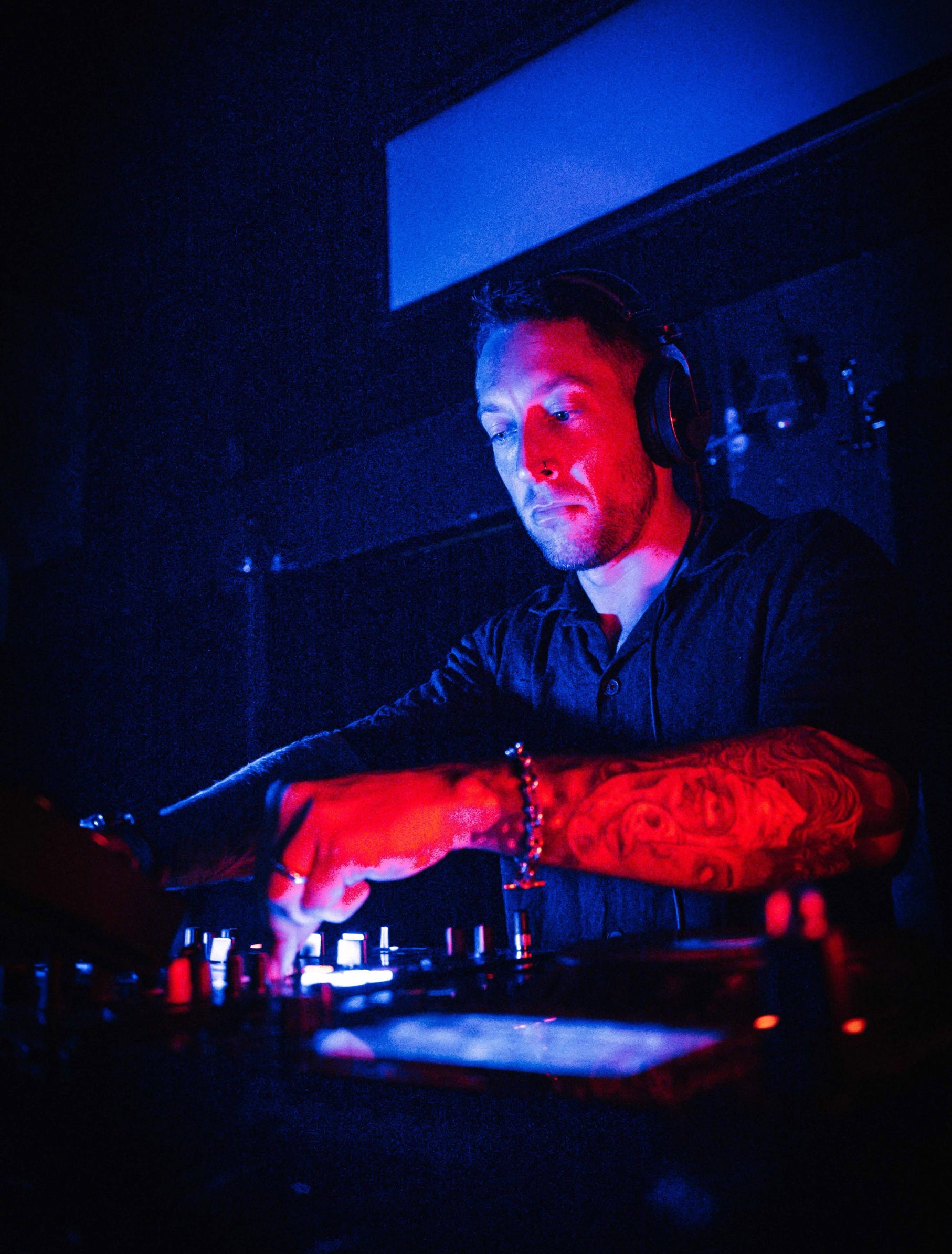
Hello John, how are you today, and what have you been up to lately?
I’m doing great! Thank you! I’ve recently been finishing a couple of projects I’m currently working on. I am also in the process of updating my sound towards more uptempo and club-oriented tracks.
Can you briefly share when you first started producing music, what your first piece of equipment or software was, and how you look back on your earliest releases?
I started producing music way, way back in time, more than I’d like to admit. I started right after a DJ course I took in my hometown around 2010/2012. I didn’t take it really seriously until three or four years later, as I would quit, come back, quit again, and so on, out of the frustration of sounding like crap.
Regarding DAWs, I originally learned Ableton, then Cubase, and then Logic. After a few years on Logic, I returned to Ableton because its simplicity and speed are unmatched. It’s a bit more work to make the sound summing match the outputs from Logic.
The first equipment I bought with money from a part-time job was an NI Total Kontrol 1, I believe that was the name, the first interface from NI for producing, a pair of Sennheiser SP2 headphones and a small two-octave keyboard, the cheapest one there was.
When I look back at my earliest releases, I’m happy I didn’t release music until I reached a quality level I was satisfied with. I think I didn’t release anything during my first eight to ten years of producing, and I’m very happy I did it that way instead of releasing half-baked or poor material. I assume every artist is different and goes through a different journey.
I invested heavily in teachers and artists I admire, and that makes me very thankful I had that opportunity. Artists like Diego Poblets, Emilio Reyna, Matias Giunta, Heik, Gespona, Fabricio Monsoni and even one of my main influences from back in the day, King Unique.
Your music moves between progressive house, melodic techno, deep house, breakbeat and downtempo influences. How would you describe your sound to someone hearing your music for the first time?
Yes, I use elements from different subgenres within the melodic realm, which keeps the end result fresh. It’s a risky business, especially when improvising, as 90% of my sets are improvised.
Something worth mentioning is that almost all of my tracks have fat low-frequency grooves that are clubby, which makes everything feel cohesive while remaining energetic, even at slower BPMs. My sets are constructed progressively, both in intensity and storytelling.
Your biography mentions a strong focus on melody and storytelling. How important is the narrative side of music for you when creating a track or building a DJ set?
It is very important. It is the difference between a newcomer DJ and someone with 10 or 20 years in the profession.
The only challenge of presenting deeper works is that listeners nowadays have fish-like attention spans and, unfortunately, that needs to be taken into account in both track arrangements and DJ sets. Now you really need to justify a drop longer than one minute.
When you start a new track, do you usually begin with a melody, a groove, a sound design idea, or a certain emotional state?
Until very recently, I used to start with the melody and then construct everything from there. Nowadays, I find myself building both the melody and the groove together from the beginning.
Something I do from time to time, and plan to do more often, is to have a clear intention when sitting down to create. The tracks that were created with a specific intention, where I imagined the situation in which they would be played, were selected in contests and featured in other artists’ shows. There’s a certain magic in creating intentionally instead of simply making a groove and seeing where it goes.
Your recent EP on Sound Avenue, “Have You Seen My Boat?”, marks your third EP on the label. Can you tell us more about the concept behind the release, what inspired the title track, and how the first idea came together?
Yes, and I’m very happy we could finally release it. I think we worked on the EP together with the remixers for about a year. I still wanted it to be released because I loved the melody. My sound has evolved since then, but the story behind the track is still very beautiful.
The title was inspired by water, the open sea and a beautiful sense of flow. I believe the first idea came while I was playing with a mono sequencer arp from a very old Max installation I had. I was simply playing, as an act of pure joy and openness. That’s usually how I download melodies and magic from whatever you believe we’re all connected to, whatever name you choose to give it.
The track has a sound rooted in groove, atmosphere and careful progression. How do you approach arrangement and energy flow when producing this kind of progressive music?
I just make sure the groove would work in a club and that there are no hard stops or sections where someone might get bored or lose interest.
My approach is to first work on the track until it’s around 80 to 90 percent complete in terms of arrangement, effects and so on. Then I edit every section separately, phrase by phrase. Sometimes the edits aren’t necessary, but the money is in the edit.
How did your connection with Sound Avenue first come about, and how do you look back on the relationship with the label now that this is already your third EP with us?
It was a beautiful connection. I had been following Dominique and the label for many years because I knew it was a solid label from the time I was learning to DJ. Back then, Diego Poblets had released music on the label and that caught my attention.
Years later, when I was finally ready to send demos, it was an instant match.
One of the great things about Sound Avenue and Dominique is their openness to present different elements that aren’t necessarily 100 percent pure progressive house. I think that openness is one of the reasons why so many renowned DJs follow the label’s releases. I believe the whole genre is evolving, and we’ll see new artists pushing the sound in fresh directions instead of sticking to an old formula.
You have also released on Future Avenue, Hexagonal Music and Soundteller Records. How do you feel your sound has evolved across these different releases?
The sound is becoming more minimalistic and a bit more impactful. Right now, I’m working towards creating stronger locking grooves with fewer elements.
One of my biggest challenges as an artist has been creating something different within the subgenre, but not so different that it wouldn’t fit into a progressive house set.
This new EP comes with remixes by Kyotto, ZAHNA & Ignacio Tuzio, AOVA and Thaddeus X. What does it feel like to hear other artists reinterpret your music?
I love it! Especially when some of the remixers are producers I already know because I regularly play their music, like Thaddeus X and Kyotto. Not only that, but it also creates new connections between artists, and that’s magical.
One of the remixes comes from AOVA, who is also based in Mexico. How important is the Mexican progressive and melodic scene to you, and do you feel there is a strong creative energy there at the moment?
There’s definitely a scene forming. It also depends on the city. As I live in the Caribbean, strictly progressive and melodic music still has relatively few followers here, while more house-oriented sounds are more widely accepted.
Releasing music has also allowed me to discover artists I wasn’t familiar with before, and I’m looking forward to meeting and collaborating with many of them in the future.
Your early works received support from names such as Hernan Cattaneo, John Digweed, Graziano Rafa, Marco Carola, Paco Osuna and Richie Hawtin. Do you remember the first time you saw a major artist supporting your music, and what that moment meant to you?
It was a shock, especially because at that time I still had doubts about my music.
It meant the world to me because it validates the path you’re taking. Some of those names have been huge inspirations throughout my career, so receiving their support always motivates me to become a better artist, be more responsible and continue taking my work very seriously.
A recent milestone in your career was winning the Stimming Remix Competition for “Keys Don’t Match”, selected by Stimming himself from more than 350 entries. Can you tell us more about that experience, and did it influence the way you approached your own music afterwards?
I’ve followed Stimming for a few years and own some of his early EPs. He’s been a huge inspiration, especially in the way he records elements and creates unique grooves. I still think his productions are masterpieces that sound warm and timeless.
While working on the remix, I imagined exactly where and in what situation the track would be played.
When Stimming announced the winners and explained what he felt while listening to each remix, he described exactly the same picture I had in mind while creating mine. That was incredible.
We’re all connected, and if enough intention is invested in the creative process, it creates bigger waves and resonates more deeply with whoever listens or dances to it. That’s what I strive for.
As a DJ, you focus on connecting downtempo, breakbeat, deep house, progressive house and melodic techno. What does your ideal DJ set feel like from beginning to end?
A six to eight-hour set where I can move through all of those styles in a way that creates a cohesive and pulsating journey. I’ve done this several times, especially at private events, and it’s where I can really showcase my skills.
You sometimes play extended six-hour sets. How do you prepare for longer journeys compared to shorter, more concentrated performances, and how much do you leave open to the moment?
I almost never prepare sets unless it’s for a specific event with a defined sound or particular audience requirements.
I have my music collection organised in a way that allows me to adapt instantly to any situation, DJ or event because I always know where to find exactly what I’m looking for.
With so many creative possibilities today, how do you approach quality control in your work? Do you rely more on instinct, discipline, or a structured process when deciding which tracks are ready to release?
I don’t know how many tracks I’ve produced since I started, maybe somewhere around the 800 to 1,000 mark.
I find it useful to make eight to ten tracks that are around 70 percent finished, then carefully listen back to all the ideas and decide which ones deserve to be taken to 100 percent and where I’d like to send them.
I’ve been working this way for a long time, and I really practice minimalism now. I try to keep the main melodies and groove within 12 to 15 channels, so a finished track doesn’t exceed 25 to 30 channels.
More than that doesn’t make sense to me anymore.
Another approach I now use is intentional listening. Every change in volume, reverb wet percentage or saturation is done with my eyes closed. Most mixing issues can be solved simply by assigning the right volume to each element with greater awareness. That’s a concept I learned from Steve Duda, the creator of LFOTool and Serum.
Many artists have a signature sound or style. How do you balance staying true to your artistic identity while also experimenting and evolving as an artist?
In my case, I think it happened naturally.
I used to be obsessed with finding my signature sound, but I quickly realised that doing the same thing over and over becomes boring and no longer excites me as much as simply experimenting and having fun.
When I stopped thinking about it so much and simply started creating, my sound naturally began to emerge because I found myself choosing similar textures, ambient sounds and musical ideas. Even the drops and the overall structure of my tracks tend to follow similar patterns.
The music industry has changed rapidly in recent years, with streaming, social media and digital tools reshaping the landscape. How have these changes affected your path as an independent artist?
I’m fortunate enough to work in IT, something completely different from music, which allows me to fund my music project and invest in teachers, VSTs, new libraries and synths.
I believe investing is an essential part of building any company because I see this as a brand rather than simply an independent artist project.
Unfortunately, the state of the music industry, artist royalties and opportunities continues to shrink. The artists who will survive are those who remain true to themselves and consistently show who they are. That’s something I plan to work on with greater intention.
What advice would you offer to your younger self, considering all the knowledge and experience you have gained so far? And what advice would you give to aspiring artists who may be reading this interview?
Grow your vision. Keep enjoying the journey. Focus on the process, not the results. Do not compare yourself to others.
Besides music, do you have any other passions, practices, or hobbies that inspire you or help you stay balanced?
Yes! I do heavy lifting to failure twice a week, I practice Pilates, I’ve recently started working with kettlebells and, from time to time, my wife and I play Diablo on the PS5.
Most of my time outside my 9-to-5 job is still spent in the studio.
Could you share a few of your all-time favorite tracks that have had a significant impact on your musical journey?
Sure! Here are a few:
King Unique, 20000000 Suns
Minilogue, Animals
Guy J, Lamur (Henry Saiz Remix)
Guy J, Candyland (King Unique Remix)
Manuel Satie, Flores
Djuma Soundsystem, Les Djinns (Trentemøller Remix)
Sol & Grimm, Exuma
Nathan Fake, The Sky Was Pink (James Holden Remix)
Röyksopp, Sordid Affair (Maceo Plex Remix)
What can listeners look forward to from you in the near future?
More groove, more energy, and more groove locks.
Stream/download his latest release:
https://go.protonradio.com/r/rlqHMonHOGrCs
Follow John Moblack here:
Instagram: https://www.instagram.com/johnmoblackmusic
SoundCloud: https://soundcloud.com/johnmoblackmusic
Read all our interviews on our free Patreon !